Coffee shop loyalty: paper stamp cards vs points in the POS
Paper stamp cards or POS reward points? How each coffee shop loyalty model works, what it really costs, and how to set earn and redeem rules that don't give the shop away.
Key takeaways
- Stamp cards are cheap to start but invisible: you cannot see who your regulars are or what the program costs.
- Points in the POS reward spend, not just visits, and give you a customer list.
- Set the reward at a level you can afford, then measure redemptions monthly.
Every independent coffee shop has regulars; the question is whether you know who they are. This guide compares the two loyalty models most cafes use and shows how to set rules you can afford.
What is a coffee shop loyalty program?
A coffee shop loyalty program rewards customers for coming back — classically a stamp card where the tenth drink is free. Modern versions run inside the point of sale: the customer gives a phone number, earns points on what they spend, and redeems them for a reward.
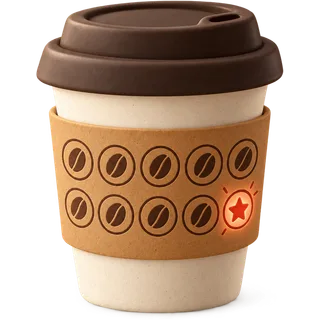
Model 1: The paper stamp card
How it works: a printed card, a stamp per drink, a free drink at the end.
Pros
- Costs almost nothing to start.
- Customers understand it instantly.
- No technology to learn.
Cons
- Cards get lost, duplicated and forged.
- You can’t see who your regulars are, how often they come, or what the program gives away.
- It rewards visits only; a customer who buys a pound of beans earns the same stamp as one espresso.
Model 2: Points in the POS
How it works: the cashier adds the customer by phone number; points are added automatically when the sale is paid; the customer redeems at the counter or on your online store.
Pros
- No card or app for the customer.
- Rewards spend, so bigger orders earn more.
- You get a customer list, visit history and a monthly report of what loyalty cost.
- Works across several shops and online.
Cons
- Needs a phone number at checkout (a few seconds).
- Rules take ten minutes to set up.
Setting the rules
Four numbers define a points program:
- Earn rate — points per dollar, dirham or 100 rupees spent.
- Redeem value — what a point is worth when spent.
- Minimum to redeem — e.g. enough for one drink.
- Expiry — optional.
A simple way to copy a “buy nine, get one free” card: if your average drink is the base unit, set the reward threshold at nine drinks’ worth of points and the reward at one drink. The effective discount is about 10% of drink spend for customers who complete the cycle — and less overall, because many never do.
What does loyalty cost?
Look at redemptions, not points issued. If last month you gave away the equivalent of 120 drinks and your ingredient cost per drink is a fraction of the price, the true cost is the ingredient cost of those drinks plus any sale it displaced. Compare that with the visit frequency of members vs non-members in your reports.
Making regulars feel like regulars
- Greet by name when the phone number brings them up.
- Repeat their last order with one tap.
- Send a win-back message if a regular hasn’t visited in a few weeks (with their consent; this is what the Full Pour bundle automates).
The short version
Start with points in the POS unless you truly want zero setup. Choose an earn and redeem rate on purpose, read the redemption report monthly, and use the customer list to bring people back. See how loyalty works in GetCafePOS — it is included in every plan.
Try it on your own menu. GetCafePOS includes modifiers, loyalty, tips and order-ahead in every plan.
Start free trial